Hoodie Star: A Handwritten Display Font for Crafters & Sellers
If you've ever spent hours searching for that perfect handwritten font—one that feels personal but still cuts cleanly on your Cricut or Silhouette, reads beautifully on a tiny candle label, and adds instant charm to a wedding welcome board—you’ll understand why Hoodie Star has become my go-to display font for physical products and digital printables.
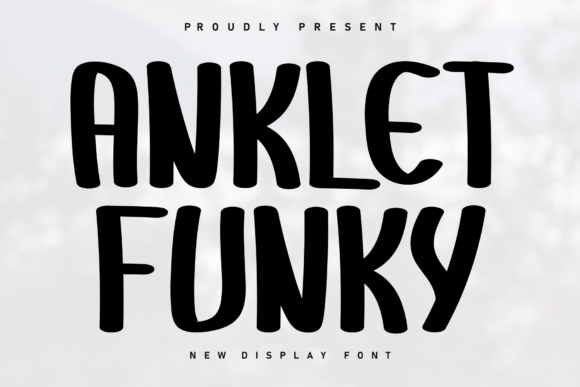
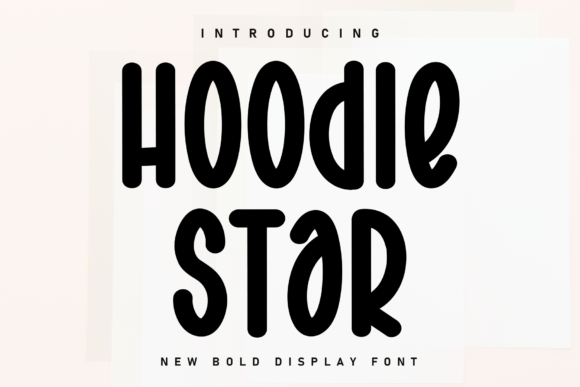
Hoodie Star is a relaxed, sporty handwritten typeface that looks like it was drawn with a bold marker—confident, friendly, and full of movement. It’s not overly ornate or fussy, which means it holds up exceptionally well at small sizes and translates beautifully across materials: matte sticker paper, kraft tags, glossy invitation stock, or even heat-transfer vinyl on tote bags. As a display font, it’s designed for impact—not long paragraphs—but for the kinds of short, meaningful phrases that sell handmade goods: “Hand-Poured,” “Made With Love,” “Est. 2023,” or “You’re Invited.”
I use Hoodie Star across nearly every part of my small shop workflow. For greeting cards and printable stationery, it gives a warm, approachable voice without sacrificing clarity. On wedding supplies—like seating charts, menu prints, or acrylic cake toppers—it softens formal elegance with just enough casual energy to feel modern and heartfelt. And for boutique product labels? It’s been a game-changer. My lavender soap bars now feature clean, confident “Lavender Dream” headers in Hoodie Star, paired with a simple sans serif for ingredients—customers consistently comment on how “thoughtful” and “crafted” the packaging feels.
It works especially well for seasonal and themed designs. Last holiday season, I created a set of printable farmhouse-style gift tags using Hoodie Star for names (“For Sarah,” “To Dad”) and a crisp geometric sans serif for the year (“2024”). The contrast felt intentional, balanced, and shelf-ready. For spring collections, I used it on planner stickers (“New Beginnings,” “Bloom Here”) and found it held up perfectly—even at 8pt when printed on 1-inch round vinyl stickers.
Readability matters—especially when cutting. Hoodie Star has generous spacing and open letterforms, so there’s minimal risk of inner counters (like the center of an “e” or “a”) dropping out during vinyl weeding or laser cutting. I’ve tested it down to 12pt on matte paper labels and 16pt on iron-on transfers with consistent results. Just avoid using it for dense body text or multi-line product descriptions—it’s a display font, not a workhorse text face—and that’s exactly where its strength lies.
Pairing Hoodie Star thoughtfully elevates your whole design system. My most reliable combo is Hoodie Star for headlines + Montserrat or Inter for supporting text. That pairing delivers warmth and professionalism in equal measure—ideal for Etsy shop banners, digital templates, or client-branded packaging. For wedding stationery, I often layer it with a delicate serif like Cormorant Garamond for ceremony programs or RSVP cards. The contrast between Hoodie Star’s playful energy and the serif’s quiet refinement creates visual rhythm that feels both curated and sincere.
The font includes standard OpenType features—ligatures and stylistic alternates—that add subtle polish without overcomplicating your workflow. I especially love the alternate lowercase “g” and “y” for invitations where personality matters. It’s delivered in OTF and TTF formats, fully compatible with Design Space, Silhouette Studio, Canva, and Adobe Creative Cloud. While it doesn’t include extended Latin or Cyrillic support, it covers basic Western European languages thoroughly—more than enough for most craft-based businesses serving US, UK, CA, AU, and EU markets.
One practical note many makers overlook: commercial licensing. Hoodie Star is licensed for commercial use, meaning you can confidently use it on physical products you sell (mugs, shirts, stickers), in digital downloads (planner pages, SVG bundles, Canva templates), and in client work (logo concepts, shop branding, social media graphics). Just be sure to check the license terms for any restrictions on unlimited resale (e.g., embedding in editable Canva templates sold on marketplaces)—most reputable sellers clarify this upfront, and Hoodie Star’s license supports small business scale without hoops.
Real-world examples that worked for me:
- Candle labels: “Sage & Sea Salt” in Hoodie Star (24pt) + Montserrat Light (10pt) for scent notes—clean, legible, shelf-distinctive.
- Wedding welcome sign: “Welcome to Our Day” in Hoodie Star on reclaimed wood—hand-painted mockup translated flawlessly to vinyl cut.
- Digital printable wall art: “Good Vibes Only” poster with Hoodie Star headline + minimalist line art—top-selling item in my Etsy shop last quarter.
- Boutique clothing tags: Small cotton hang tags with “Handmade in Portland” in Hoodie Star—soft but assertive, matching the brand’s ethos.
- Seasonal mug designs: “Cozy Season” on ceramic mugs—no pixelation, no thin strokes breaking at high-heat transfer temps.
What makes Hoodie Star more than just another handwritten font is how it bridges intention and execution. It’s expressive enough to carry emotional weight—“Just Because,” “You Belong Here,” “Hello, Sunshine”—but grounded enough to stay legible, scalable, and production-friendly. In a world where handmade buyers scroll fast and decide faster, that balance isn’t just nice—it’s necessary.
Whether you're designing SVG files for fellow crafters, building a cohesive brand identity for your candle line, or creating one-of-a-kind wedding stationery, Hoodie Star delivers personality without compromise. It’s not just a font—it’s a quiet upgrade to how your products speak before they’re even touched.